Deceptive Simplicity: A Conversation with Tessa Souter
My interview with the singer and songwriter about her latest album “Shadows and Silence,” inspired by the music of Erik Satie

This interview with the singer and songwriter Tessa Souter was done for JazzTimes late last year. I’m posting it now because Tessa will be performing material from this project in an album release concert at Joe’s Pub in NYC on May 17. Information about the show here.
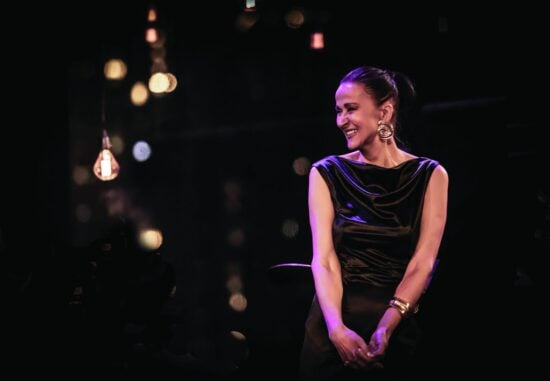
Photo of Tessa Souter by Tracy Yarard
Born in London to parents of Afro-Trinidadian and English descent, Tessa Souter has been singing since she was three, encouraged by her mother. But her path to becoming an accomplished jazz singer and songwriter was first interrupted by becoming a wife and mother at 16 and a single parent at 18.
In her 20s, instead of beginning a career in music, Souter found herself immersed in print journalism, writing for Elle, Elle Decoration, Vogue, House Beautiful, the Sydney Morning Herald, South China Morning Post and The Guardian. Eventually coming to New York, she began her jazz career, not only paying her dues in open mics and small clubs but also studying with the singular Mark Murphy. In the ensuing years she recorded and released five albums as a leader, beginning with Listen Love in 2004.
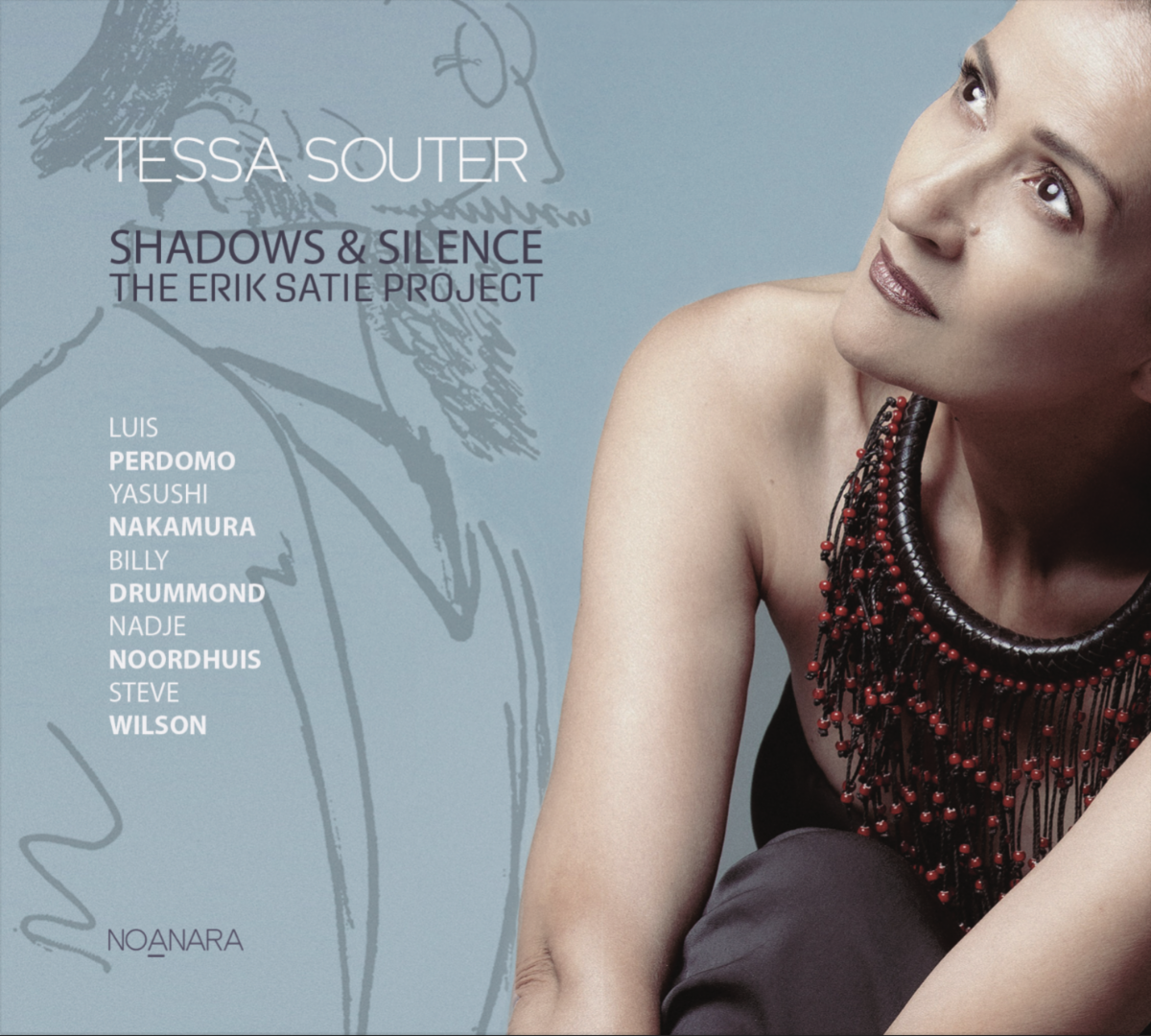
All those experiences and influences have coalesced on her latest recording. Souter didn’t set out to make an album devoted to music of Erik Satie (1866-1925). As she explains in the conversation that follows, Souter took a circuitous but very personal journey to find her place within the late composer’s evocative minimalist compositions. The resulting recording, Shadows and Silence: The Erik Satie Project (Noanara Records), features Souter’s original lyrics to Satie compositions as well as adaptions of Jacques Brel’s “If You Go Away,” Wayne Shorter’s “E.S.P.” (with Cassandra Wilson’s lyric) and Ron Carter’s “Mood.”
I talked with Souter about the evolution of the project, Satie’s unique sound and her own creative process in the edited exchange below.
*****
Lee Mergner: How did you come to focus on Erik Satie?
Tessa Souter: It began over 20 years ago, I was just out of a life-changingly bad relationship when I heard French jazz vocalist Anne Ducros’s brilliant and entirely improvised vocal arrangement of “Gnossienne No. 1” and a partial lyric came to me. The imagery was about being magnetized into black holes and comets smashing into Earth and killing all the dinosaurs. Of course, I don’t literally say any of that, I like my lyrics to be open to interpretation, but it’s implied.
I played around with it for two decades, sharing its various iterations with my son, who felt it could fit multiple situations — from the personal to the political. Then in 2020 my regular bassist, Yasushi Nakamura, who is also on my 2018 album Picture in Black and White, had his first son, Rayga, and I wrote a lyric for him to “Gymnopedie No. 1.” The circumstances of his birth were somehow so evocative — born in a snowstorm early in the morning during Covid.
I had three potential albums in mind at the time, but things happened that pushed Satie to the forefront. A beloved “chosen uncle,” who would come to all my gigs and press strangers up against the wall and tell them how we met and how great I was, died suddenly. On the Monday I’d had to send cops to break down his door, and they took him to hospital. On the Tuesday, the hospital told me he’d nominated me as his healthcare proxy, which they said meant respecting the patient’s wishes (to die), not mine (to keep him alive at all costs).
Because he refused the treatment they’d recommended, they moved him from the nice private room in ICU to a horrid shared room with men shouting. So I used my British accent and all the charm I could muster to get him moved to a nice hospice on the Thursday. We went together in the ambulance and by the next day he was gone. I’m so grateful to have spent those last days with him. But honestly, it knocked me for six.
Then my mother, who I always joked was “a tank,” suddenly became mortal when during a bout with sepsis she was discovered to have an inoperable thoracic heart aneurysm. It was super stressful because aneurysms can burst at any time, so she was my first call of every day.
It was taking up a third of her chest by the time she died several years later — which was right when I finished the album in 2024. She heard only one song, “If You Go Away,” which she’d sung with me on the phone before I recorded it (she was a fantastic singer), and which I played … to her in hospital.
I also lost several friends during the making of this album, including one of my besties, the saxophonist and singer Sheila Cooper. She was super intelligent and deeply spiritual, and we used to discuss what might happen after death. We decided it would be peace and beauty. And my friend and mentor, singer Mansur Scott, died. But there was joy too: [drummer] Billy [Drummond] and I got married after 14 years together. Yasushi’s baby was born. It’s all in this recording. Donald Vega was studying it recently for a performance we had at Dizzy’s, and he said: “This album is life, man. It’s life!”
Why were you drawn to Satie’s music?
It is thoughtful and thought-provoking music, which is probably why so many cinema verité movies have utilized it. Louis Malle’s Le Feu Follet (which was called A Time to Live, A Time to Die in the UK) was among the first. And it closes Malle’s My Dinner with Andre — a conversation between two men about life, books, philosophy, mortality, Being, spirituality.
Hal Ashby’s Being There uses Satie’s music at important moments throughout the film — particularly evocatively in the final scene. His music is eccentric, spiritual. Satie founded his own religion, “The Metropolitan Church of the Art of Jesus the Conductor.” It’s authentic, impressionistic, ephemeral. It lends itself to deep themes.
For example, the lyric for “D’Ou Venons-Nous (Gymnopédie No. 3)” was inspired by a Hindu cab driver who’d asked me why I was crying and, when I told him my uncle was dying, said: “Don’t be sad. Wish for him to be born again into a happy life!” It was perfect.
Ken and I had met in the jazz section at Tower Records. I used to wander around with all the CDs I wished I could afford, then put them back and leave, and one day he stopped me on the escalator and asked whether one or both of my parents was from Trinidad. I was stunned, because it’s not something you can tell by looking at me, and this was pre-internet, before I’d recorded anything. It felt like he’d somehow “recognized” me from another life.
Billy’s arrangement of it happened spontaneously in the studio—seconds before we started recording: Yasushi would play the melody arco up front, everyone would respond instinctively, and I’d sing the melody over that landscape. It gave me a lot of emotional freedom.
What were Satie’s unique qualities as a composer and pianist?
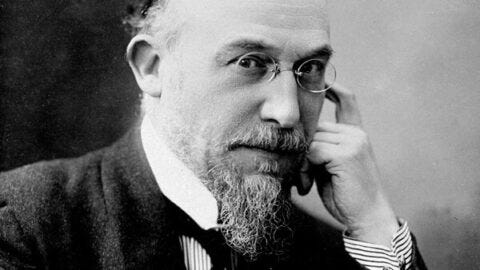
I’m not an authority on Satie. But from what I’ve read, he was a lazy music student. I suspect part of what made him unique was the very fact that he was not a scholar and was able to express his beautiful ideas unfettered. The Gymnopedies and Gnossiennes — the period I’m focused on — were written in his early 20s, when he was a cabaret pianist at Le Chat Noir in Paris, and they were way ahead of their time.
Where does he fit into the pantheon of classical composers?
Again, I am not an expert but I guess he was a pioneer, an individual, a maverick, a style-setter, rejecting the prevailing grandiosity of Wagnerism in favor of a minimalism and apparent but deceptive simplicity. He was a huge influence on Debussy, who later orchestrated his Gymnopedies, and Ravel, and the group of young avant-garde composers known as “Les Six,” who were influenced by Satie and the writer Jean Cocteau.
He led sort of a tragic life. How do you think that informed his music?
Music, like humor, is incredibly self-soothing. So, it totally makes sense that the music of his 20s would be soothing to others. While writing lyrics to his compositions, I felt I got to know him. Certain aspects of his life echoed my own. My childhood also had rug-pulled-out-from-under-me moments — learning at 12 that my beloved dad wasn’t my biological father, who I was told was Spanish and had died in a plane crash, and then at 28 learning he wasn’t Spanish, but Black, and alive.
I moved constantly. I went to 16 schools. My mother, who was also an artist’s model, reminded me of Satie’s great love, Suzanne Valadon — beautiful, bohemian, charismatic, elusive. Loving free spirits is like trying to hold onto a wraith. There’s something of that in his music — it’s ungraspable.
What about his music somehow relates to modern jazz?
When I began writing the lyrics, I noticed he constantly does the unexpected. “Gymnopedie No. 1,” for example, repeats twice exactly, until the penultimate note the second time, which is flattened. Or certain songs seem to change keys mid-sentence. It pulls you up short. Most of his charts have no key signatures or bar lines, all of which is very Wayne Shorter, another famously eccentric composer.
Dave Brubeck studied with Darius Milhaud, a member of Les Six and a protégé of Satie. Another Les Six member, Francis Poulenc, referred to Satie as “the first jazz musician.” And Satie’s influence on modal jazz — Bill Evans’s “Peace Piece,” “Blue in Green,” in fact, the entire Kind of Blue aesthetic — is irrefutable.
You connected the dots between Satie and Miles and Wayne. Explain that connection.
Shorter’s “E.S.P.,” which is on the album, is Satie-esque in its construction. But the people that Satie influenced — Bartók, Debussy, Ravel, Stravinsky — are widely acknowledged to have influenced the great influencers of modern jazz.
Let’s talk about the band that you chose for this recording.
I let these extraordinary players do what they feel. That’s the whole point… I arranged very little on this album. I loved singing the arrangements by [pianist] Luis Perdomo, also “Gymnopédie No. 3” by Billy [Drummond], and following where they led. It was like opening a Russian doll.
Luis’s teacher, Sir Roland Hanna (1932-2002), had encouraged him to play Satie to calm himself down, so he was very receptive to the idea. I’d been playing with Luis since 2019 but I had no idea he was such a great arranger. His Afro-Cuban version of “A Song for You (Gnossienne No. 1)”, totally captures the mood. He added the batá and shaker himself. He was the one who told me to abandon fitting my lyric to the Anne Ducros improv, which was becoming a square peg/round hole situation. He suggested I go back to what Satie wrote and it absolutely liberated me.
When I gave Luis the finished lyric, he just made off with it, and it was love at first listen when he gave it back. His arrangement of “Holding on to Beauty (Gnossienne No. 3)” is so romantic — again in keeping with the lyric, which I wrote for my husband. All his arrangements just work on every level.
Saxophonist Steve Wilson contributes memorable solos that reminded me of Wayne Shorter’s work with Joni Mitchell.
I really wanted to have a soprano saxophone on this album, and I’d left space for it. Billy, who doesn’t normally advise or involve himself at all in my musical decisions, told me that Steve is one of the best sopranos out there… I played his addition to “Rayga’s Song (Gymnopedie No. 1)” for a singer-songwriter friend who immediately picked up that Steve was instinctively channeling a child. The parts he added to Ron Carter’s “Mood” are so tasteful and responsive to what [trumpeter] Nadje Noordhuis had already laid down. And his solo on “D’Ou Venons-Nous (Gymnopedie No. 3)” is insane. It’s perfect. It’s a spirit leaping between lives.
And you also have Nadje Noordhuis, a longtime member of the Maria Schneider Orchestra, on flugelhorn.
I had this idea of repeating the four bars of Satie’s “breakup” song, “Vexations,” under a reading of the one surviving letter he wrote to Suzanne Valadon. When he died 30 years after their affair, 300 unsent letters to her were found in his room; she read them and burned them. I asked Nadje to be Suzanne responding to the letter which, to be honest, is a bit stalkerish, which may be why she burned the others. I wanted a woman energy — strong, resolute, unyielding. She nailed it. And I love what she does on “Mood.” She has the most beautiful, heart-piercing tone. It’s Truth.