Danilo Pérez: Celebrating Panama’s Past, Present, and Future
The pianist and composer on his new piece, "The Panafrica Suite"

My story, written for the Jazz at Lincoln Center concert program, about Danilo’s upcoming performance there on March 13-14.
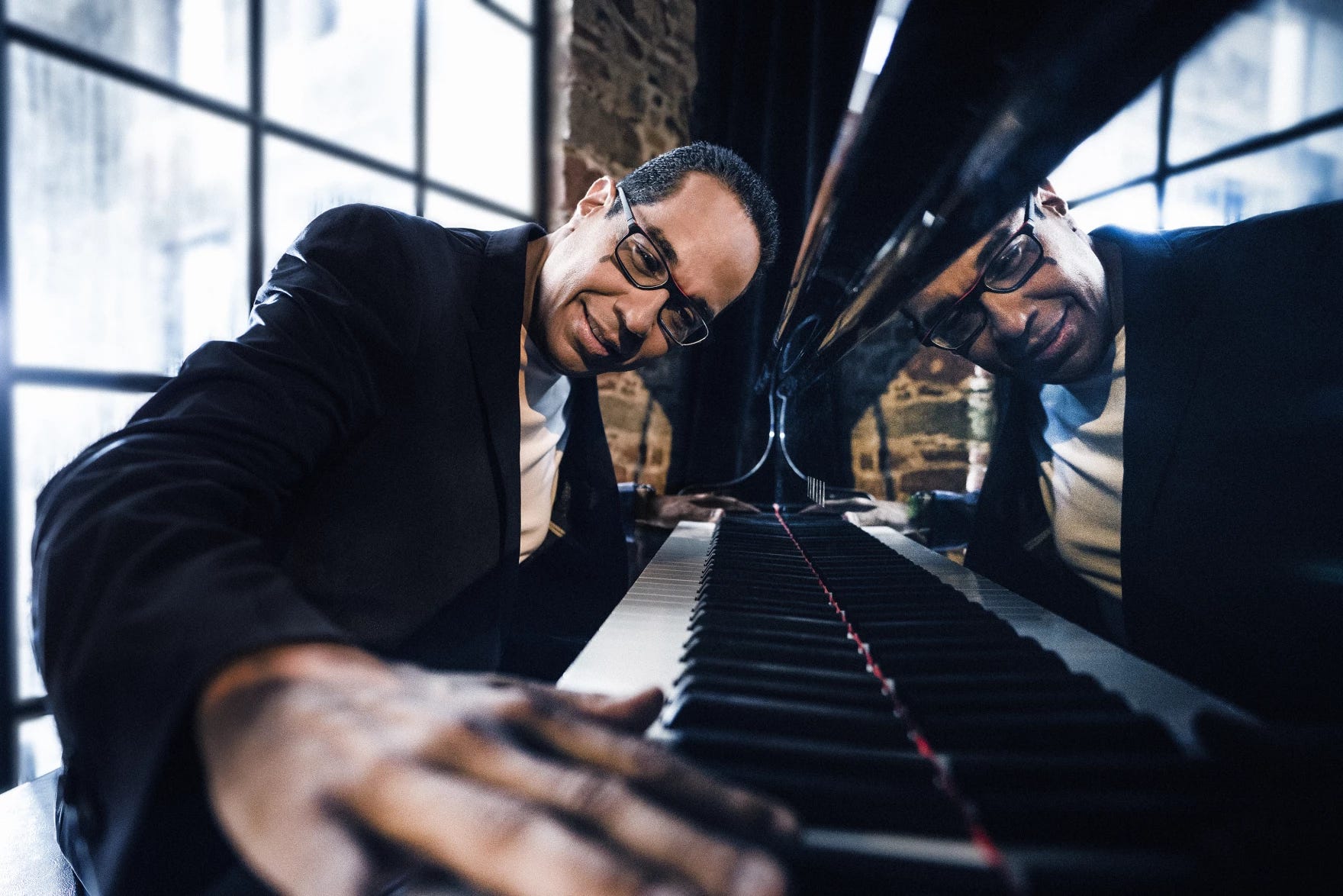
Although he’s had a storied career on the global jazz stage, the Panamanian native Danilo Pérez has never turned his back on his home country. In addition to founding the annual Panama Jazz Festival, the prolific pianist and composer has established community music education programs in Panama City that have made a difference in the lives of hundreds of young people. And, as founder and artistic director of the Global Jazz Institute at Berklee School of Music since 2009, Pérez has mentored young musicians from countries all over the world, including Panama.
Pérez’s The Panáfrica Suite, which was commissioned by Jazz at Lincoln Center and will be debuted alongside new music by saxophonist Godwin Louis as part of the March 13-14 African Routes shows, is the culmination of many years of study and research into Panama’s rich and complicated past. The matter of identity is deeply personal to Pérez, who has drawn on both his own indigenous and African heritage to compose music that explores the African and Caribbean diaspora.
“Panama has been a place where cultures collide, struggle, and fuse, creating a culture between worlds, a place of continuous trans-culturation,” the pianist explains. “That’s why I call my own music ‘Global Jazz,’ because it’s a hyper-meeting of cultures happening every day because of our geographical position and the legacy of slavery.”
Pérez begins the first movement with a segment narrating the arrival of King Bayano, who led one of the earliest and most organized Maroon rebellions against Spanish colonial forces in Panama during the 16th century. “’Bayano’s Landing’ celebrates ancestral memory and the birth of Afro-Panamanian identity,” he says. “This piece draws inspiration from zaracundé, an Afro-Panamanian dance and music tradition that tells the story of escaped enslaved Africans (cimarrones). Zaracundé symbolizes resistance, freedom, and cultural survival, performed with drums, song, and movement in festivals and folkloric events, and is rooted in Congo musical traditions.”
The second piece in the first movement, “Cimmaron,” refers to the escape of enslaved people to form independent communities in remote areas like jungles, mountains, and river regions. “I wanted to embody the strength, resilience, and defiance of cimarrón communities,” he explains. “It honors the courage of those who escaped oppression, preserved their culture, and built autonomous societies, continuing the legacy of Bayano and the early resistance leaders. Musically, it evokes vitality, determination, and the enduring spirit of freedom.”
“Echoes of the Canal,” the second movement, explores the impact of the collision of nations and cultures inherent in the building of the Panama Canal. The first piece in that movement, “Between Two Worlds,” reflects the challenges and creativity that arise when cultures intersect. “I tried to capture both tension and harmony,” he says. “And the music blends rhythms, melodies, and textures to evoke a landscape of exchange, adaptation, and emerging new identities.”
The second piece, “Wonders of the World,” honors the labor, sacrifice, and human ingenuity behind the construction of the Panama Canal, the 51-mile connection between the Pacific Ocean and the Caribbean Sea. That decades-long project involved multiple nations, millions of dollars, and thousands of laborers. “Through rhythmic intensity and melodic motifs, the music evokes the hands that shaped the land, the struggle of workers, and the monumental achievement that transformed Panama and connected the world,” Pérez explains. “I wanted to show Panama as a crossroads of cultures, human struggle, and transformation.”
The third and final movement “Echoes of the Isthmus” brings listeners into the present day with a celebration of the resilience of its people and culture. “I wanted to honor the ways ancestral memory continues to shape identity and culture in modern Panama,” he says. “The music evokes a sense of connection across time, linking past struggles and wisdom with contemporary life.”
Vocalist Catherine Russell’s participation in the concert is particularly meaningful to Pérez because her father Luis Russell was born in Panama and came to America at the age of 17. The pianist went on to lead his own popular jazz orchestra, which incorporated Panamanian music influences, and he later served as Louis Armstrong’s music director. “He was one of the pioneers of bringing music from Panama to New Orleans,” Pérez says. “I want to show the connection between jazz and the music of Panama and the Caribbean.” The concert will also feature the Panamanian poet and writer Yvette Modestin to provide spoken word passages.
For Pérez, the title of the final piece “We are Africa in the Americas: Esto es Panama” sums up the message he hopes to convey through the words and music. “I want to celebrate contemporary Panama and the living spirit of African heritage.”